English
In modern interior design, the choice of flooring materials not only affects the tone and texture of the space, but also involves the important issue of fire safety. Currently, SPC flooring is favored for its excellent physical properties and environmental protection characteristics, but its real appeal lies in the "flame protection" provided by its mineral core.
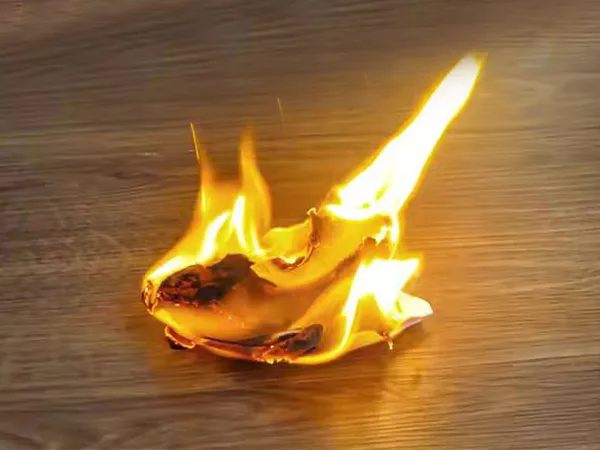
While traditional wood flooring boasts an elegant appearance, its natural wood properties make it extremely vulnerable in fire conditions. In contrast, SPC flooring offers significant improvements in safety. The core of SPC flooring is formed by high-temperature extrusion of calcium carbonate minerals (stone powder) and polyvinyl chloride stabilizers, creating a dense composite structure. This "stone core" not only provides structural stability but also effectively inhibits combustion upon contact with flames. Furthermore, through the innovative introduction of modified EVA and nanomaterials, SPC flooring can rapidly form a protective layer under high-temperature environments, thereby slowing the spread of flames.
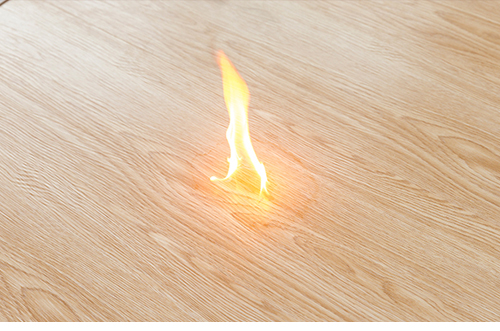
Many consumers assess the fire resistance of flooring through flame tests; however, true fire-resistant design goes far beyond that. SPC flooring typically achieves a B1 rating (flame retardant), but the greatest threat in a fire is not only the flame itself, but also toxic fumes. Therefore, markings like "Bfl-s1" in EN 14041 are crucial: Bfl indicates the fire resistance rating, and s1 signifies low smoke production and slow velocity. High-quality SPC flooring not only focuses on flame retardancy but also prioritizes smoke toxicity, providing greater assurance for escape in emergencies.
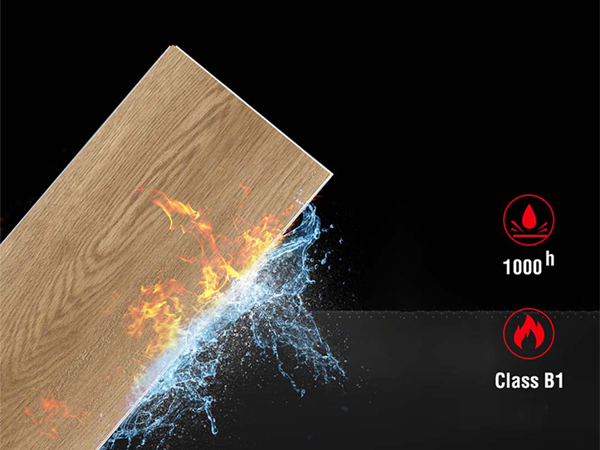
In addition to the inherent flame retardancy of the material, the structural design of SPC flooring also enhances fire safety. Modern SPC flooring typically employs a multi-layered composite structure, including a wear-resistant layer, a UV-cured layer, and a color-coated layer. The UV layer within these layers not only provides stain and heat protection but also serves as the first line of fire protection. Specific experiments have demonstrated that high-quality SPC flooring will not peel or crack under high-temperature conditions, showcasing its heat resistance. Furthermore, the high-density locking system of SPC flooring exhibits excellent stability when heated; its near-zero water absorption and expansion rate ensures that it will not deform and exacerbate the spread of fire under high temperatures.
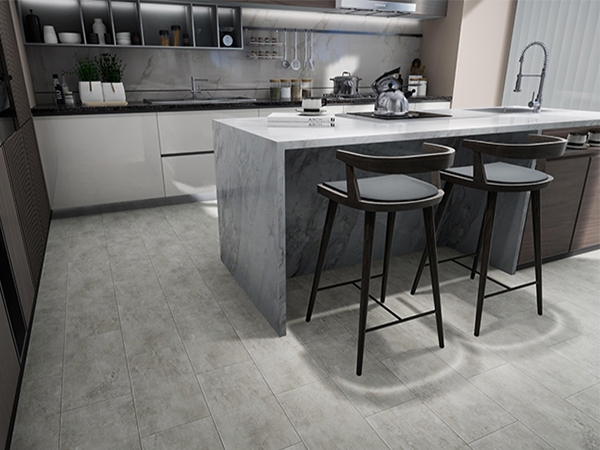
Due to its superior fire resistance, SPC flooring is increasingly being used in a wider range of fields, from residential to more demanding public areas. In homes, such as kitchens and bathrooms, the flame-retardant properties of SPC flooring make it an ideal alternative to wood. In high-traffic areas such as hotels, hospitals, and office spaces, SPC flooring meets stringent fire rating requirements, such as B1 and B-s2/d0 standards, making it a choice for designers seeking both aesthetics and safety.
The evolution of SPC flooring design reflects the importance of materials science in ensuring life safety. It's not merely about aesthetics; it's about building a comprehensive fire protection system through mineral composition, smoke control, and innovative structures. For designers and homeowners, choosing SPC flooring involves more than just waterproofing, durability, and comfort; it's about modern design principles based on fire safety. Within this framework, each plank not only showcases beauty but also serves as a robust barrier protecting lives. For more information about SPC flooring, please feel free to contact our team to help you make the best choice.
 EN
EN