English
In the building materials wholesale industry, Stone-Vinyl SPC flooring and ceramic tile are two primary types of flooring materials. Each has its distinct characteristics, making them suitable for different commercial and residential environments. This guide delves into the core differences between the two, aiming to provide wholesalers with comprehensive reference for product selection and procurement decisions.
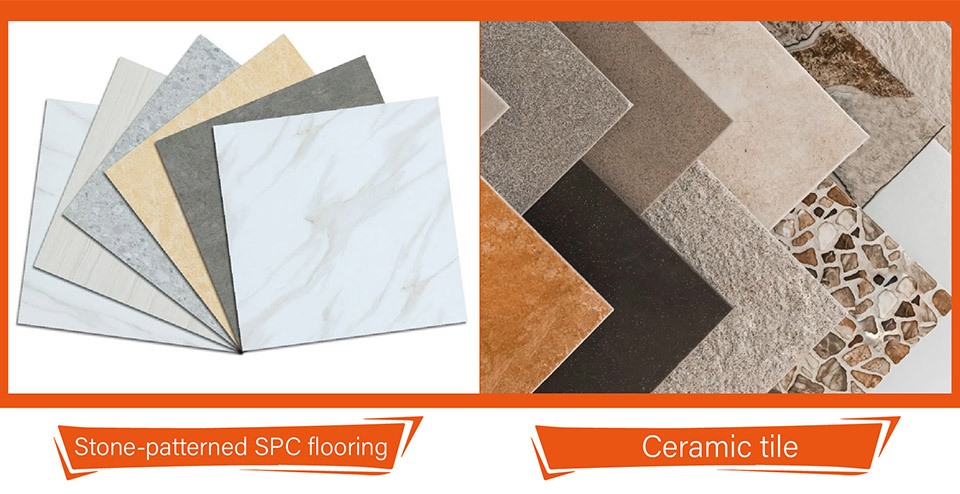
Core Composition: Made using calcium carbonate stone powder as the base material, combined with polyvinyl chloride (PVC) and stabilizers, formed through high-temperature, high-pressure extrusion. Its rigidity comes from the high-density stone powder layer, while its flexibility derives from the PVC layer.
Structural Innovation: Typically features a multi-layer composite design, including a wear layer, decorative layer, SPC core layer, and underlayment pad. The precision click-lock system enables a "floating floor" installation.
Key Properties: Combines excellent rigidity (resistant to deformation) with flexibility (impact-resistant). It is lightweight, placing less load on floor structures.
Core Composition: Made from natural raw materials like clay, quartz, and feldspar that are ground, pressed, and fired at very high temperatures (exceeding 1200°C).
Process Classification: Types include glazed tiles (surface coated with glaze), through-body tiles, and polished tiles. Performance varies based on manufacturing process and water absorption rate (earthenware, stoneware, porcelain).
Key Properties: Possesses high Mohs hardness, making it extremely wear-resistant. However, it is brittle and has poor flexural strength.
| Dimension | Stone-Vinyl SPC Flooring | Ceramic Tile |
| Process Requirements | Dry-installation, click-lock assembly. Requires a highly level subfloor but the process itself is simple. | Wet-installation, requires laying with cement mortar or tile adhesive, grouting, and sealing. Process is complex and highly dependent on the skill of the tile setter. |
| Installation Speed | Very fast. A skilled installer can cover 80-150 square meters per day. | Relatively slow. Involves multiple steps: leveling, laying, curing, grouting, resulting in a longer overall project cycle. |
| Replacement & Renovation | Easy to disassemble and reuse. Damaged individual planks can be replaced. | Essentially permanent and irreversible. Demolition is difficult and generates significant construction waste. |
| Suitable Subfloors | Most hard, level subfloors like concrete, existing tile, or wood floors (must be level). | Primarily cement mortar screeds. Requires strong adhesive bond to the subfloor. |
| Scenario / Performance | Stone-Vinyl SPC Flooring Performance | Ceramic Tile Performance | Scenario Recommendation |
| Humid Areas | Excellent. Offers strong waterproof properties, resistant to water immersion. Click-lock joints have water-resistant coatings (though edges may allow minor seepage). | Good-Excellent. The tile itself is waterproof, but installation and grout joints are critical. Aging grout can lead to issues. | SPC has a clear advantage, especially for renovation projects over existing floors. Note: Address any active water leaks first. |
| Underfloor Heating | Excellent. Good thermal conductivity, provides a non-cold feel underfoot, high dimensional stability, resistant to warping or cracking. | Excellent. Good thermal conductivity but heats up and cools down more slowly due to high thermal mass. | Both are suitable. For SPC, confirm the specific product's temperature resistance rating. |
| Commercial / High-Traffic | Good. Lifespan determined by wear layer thickness. Heavy furniture/equipment may cause indentations. | Excellent. Extremely high hardness, highly wear-resistant, and unaffected by heavy rolling loads. | For high-intensity commercial use, tile is the primary choice. SPC is suitable for medium-to-low traffic areas. |
| Comfort & Safety | Excellent. Slightly soft, resilient feel underfoot. Provides significant sound dampening and reduces injury from falls. | Poor. Hard, cold feel underfoot. Can be slippery when wet. Reflects noise (echo). | For homes with elderly/children or apartments with noise concerns, SPC is highly recommended. |
| Outdoor / Balcony | Poor. Waterproof, but prolonged direct sun exposure can cause fading and material degradation. | Excellent. Highly resistant to freeze-thaw cycles and weathering. | For outdoor areas without any shelter, choose ceramic tiles; for semi-enclosed balconies, SPC is an option. |
Cost Item | Stone-Vinyl SPC Flooring | Ceramic Tile |
Material Procurement Cost | Low-Medium. Clear price range for mainstream specifications. High-end stone-look SPC series approach mid-range tile prices. | Extremely wide range. Varies greatly from economy-grade tiles to premium large-format slabs. |
Logistics & Warehousing Cost | Lower. Lightweight, ships flat-packed, high space utilization in storage, very low breakage rate. | Higher. Heavy weight, fragile, requires heavy-duty logistics and careful handling, demanding warehousing. |
Installation (Labor & Materials) Cost | Very Low. Main cost is subfloor leveling. Installation cost for the flooring itself is low, even suitable for DIY. | Very High. Includes cost of cement, sand, tile adhesive, grout/sealer, and high labor costs for skilled tilers. |
Maintenance & Renovation Cost | Low. Easy daily cleaning. Easy localized replacement. | Medium. Daily cleaning requires attention to grout lines. Renovation requires complete demolition, which is costly. |
Total Cost of Ownership | Offers significant advantages, ideal for fast-turnaround projects like renovations, rental properties, and quick-sale developments. | In long-lifecycle, high-end projects, its extreme durability may offset the higher initial investment over time. |
Fast-Installation, Rental Market & Renovations: Position Stone-Vinyl SPC flooring as a core product. Promote mid-to-high wear layer and waterproof options, and provide installation guidance.
High-End Residential & Commercial Projects: Maintain a diverse tile product line (e.g., large-format slabs, feature tiles). Introduce premium SPC flooring to meet demands for quietness and comfort, particularly for bedrooms and studies.
SPC Flooring: Adopt a diversified design with shallower inventory depth per SKU to allow for quick replenishment and flexibility against market trend changes.
Ceramic Tile: Maintain deeper inventory for classic, best-selling lines. For high-end design tiles, implement a "small stock + promoted pre-order" model to reduce capital pressure and avoid losses from breakage.
Create intuitive comparison charts and showcase application examples. Provide installation videos to help downstream dealers and end customers understand the differences.
Offer SPC flooring samples so customers can experience the texture, click-lock system, and impact resistance firsthand.
For tile, provide professional laying pattern visualizations and advice on joint spacing and grout selection to enhance overall customer satisfaction and trust.
Stone-Vinyl SPC flooring and ceramic tile are complementary products targeting different market segments. SPC flooring is rapidly capturing cost-conscious markets with its waterproof nature, fast installation, and high cost-performance ratio. Tile maintains its high-end value proposition through unmatched durability and a natural aesthetic. Wholesalers should balance their product portfolio based on channel characteristics, leveraging SPC flooring to tap into new markets while consolidating the traditional strengths of tile to seize dual opportunities.
 EN
EN