English
The choice of wall panel materials affects appearance, performance, and total life cycle cost. This article compares the material properties, environmental impact, construction costs, applicable scenarios, and key points for B2B procurement of bamboo fiber and PVC wall panels, providing contractors, wholesalers, and project managers with a concise decision-making reference to help them weigh the trade-offs between aesthetics, durability, moisture resistance, and budget.
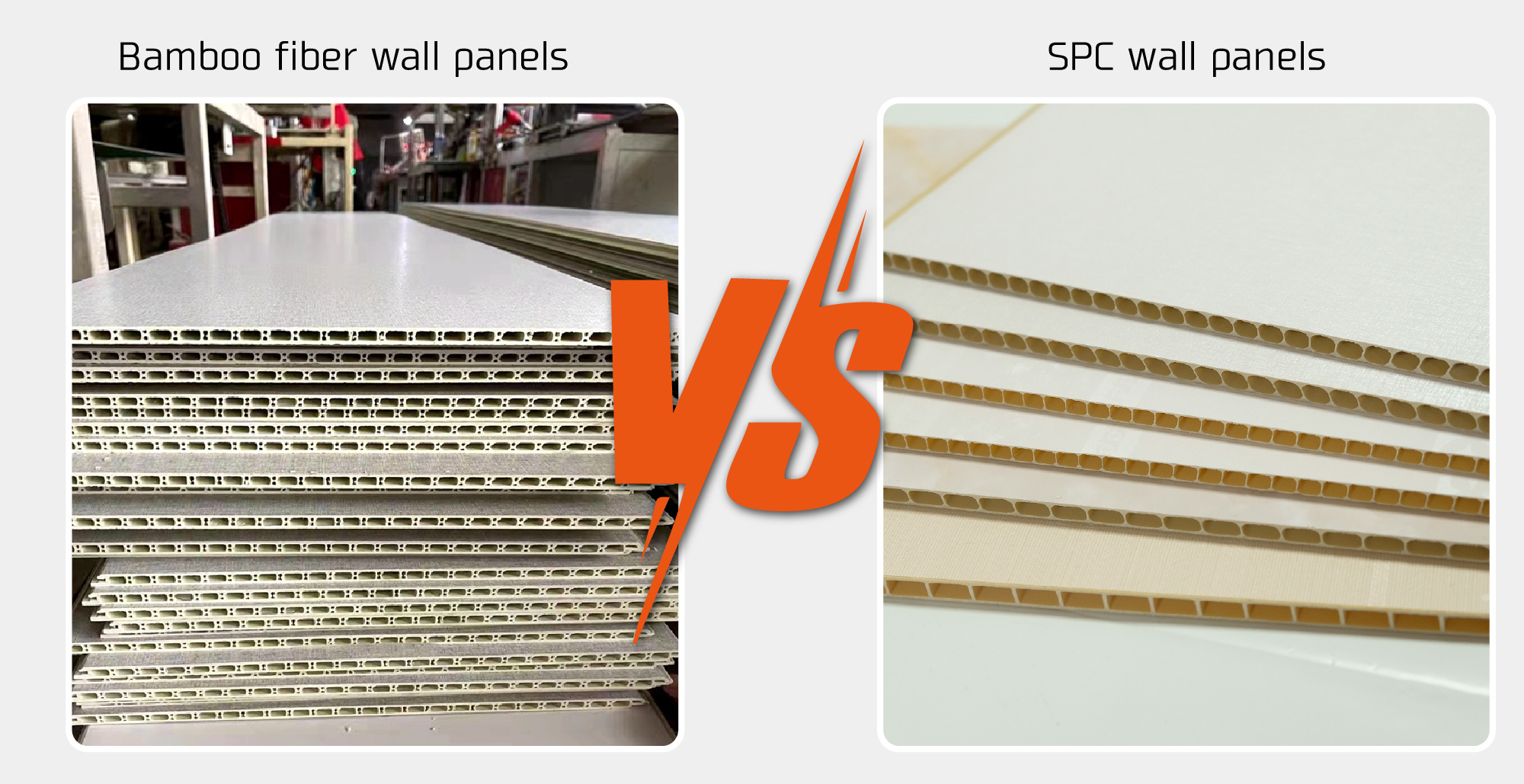
Bamboo Fiber Wall Panels: Made from bamboo/wood fiber and environmentally friendly resin through high-temperature extrusion. Commonly hollow or multi-layered structures, they have a texture similar to wood veneer and offer good heat and sound insulation. Natural component content is typically 30%–70%.
PVC Wall Panels: Synthetic plastic extrusion products primarily composed of polyvinyl chloride. Waterproof, lightweight, and available in a variety of colors and textures, they are suitable for projects sensitive to cost and construction speed.
Bamboo Fiber: Renewable, relatively low carbon footprint, meets green building requirements.
PVC: Petroleum-based, production and waste disposal pose environmental and health concerns (high energy consumption, potential VOC/additive release).
Bamboo Fiber: Real wood grain, good texture, suitable for high-end interior design.
PVC: Smooth surface, can imitate wood/marble but lacks depth, more suitable for functional spaces.
Bamboo Fiber: Excellent tensile and impact resistance, scratch resistant, better long-term stability.
PVC: Flexible but relatively poor rigidity, easily deformed at high temperatures.
Bamboo Fiber: Its hygroscopic nature poses a risk of swelling or deformation in high-humidity environments.
PVC: 100% waterproof, ideal for bathrooms, kitchens, and other humid areas.
Bamboo Fiber: Can be formulated with flame retardants, excellent fire resistance; actual fire rating depends on the formula and authoritative certification.
PVC: Prone to producing smoke when burned; fire resistance rating must be verified during selection. Ensure proper ventilation and fire protection during construction and use.
Bamboo Fiber: Requires a joist or clamping system for installation; material and labor costs are higher, but it offers a longer lifespan and greater perceived value.
PVC: Quick installation, low maintenance, low cost, suitable for large-area rapid installation.
Bamboo fiber: Targeting high-end residences, hotels, or commercial spaces with clear requirements for environmental protection and aesthetics; suitable for dry or controlled climate environments.
PVC: Suitable for projects with limited budgets, large scale, tight deadlines, or damp environments (bathrooms, kitchens, basements, etc.).
Bamboo Fiber Market Positioning: High added value, high profit margins; export priority to markets emphasizing sustainability, such as Europe, America, and Australia; emphasis on quality and environmental certifications (e.g., E0/VOC limits, flame retardant rating).
PVC Market Positioning: High sales volume, intense competition, price sensitive; suitable for developing markets and public works projects; lower logistics and warehousing costs (lightweight).
Procurement Recommendations: Cooperate with reliable Chinese manufacturers, obtain samples and test reports, and clarify OEM/ODM, minimum order quantity, transportation and after-sales terms; verify third-party testing and environmental certifications for high-end projects.
Demand for sustainable, low-carbon materials is growing, and bamboo fiber has expansion potential in the high-end market; PVC will continue to maintain its advantage in cost-driven scenarios, but faces pressure from environmental alternatives and regulatory restrictions.
If your primary considerations are: environmental friendliness + aesthetics + durability → bamboo fiber wall panels
If your primary considerations are: moisture resistance + cost + construction efficiency → PVC wall panels
If you need to consider both: PVC can be used in different areas (PVC for public/humid areas, bamboo fiber for high-end display areas).
There is no one-size-fits-all "best" material, only solutions that match your project goals. For samples, detailed specifications, quotes, or production capacity information, please provide your project type, area, and budget. UTOP Flooring & Wall Panel Factory will provide you with customized professional purchasing advice and an accurate price list.
 EN
EN