English
In both residential and commercial decoration, WPC (wood-plastic composite) flooring has replaced traditional wood flooring, laminate flooring, and ordinary PVC flooring as the mainstream flooring material due to its advantages such as waterproof and moisture-proof properties, maintenance-free operation, environmental friendliness, stability, and durability. It is suitable for a wide range of scenarios, has low maintenance costs, and offers superior stability. When purchasing WPC flooring, thickness directly determines the feel underfoot, sound insulation, pressure resistance, stability, and lifespan. Different thicknesses are suitable for vastly different scenarios, traffic flow, and usage needs. Accurate selection based on the actual indoor and outdoor scenarios is crucial to avoid common pitfalls and to balance experience, cost-effectiveness, and durability.
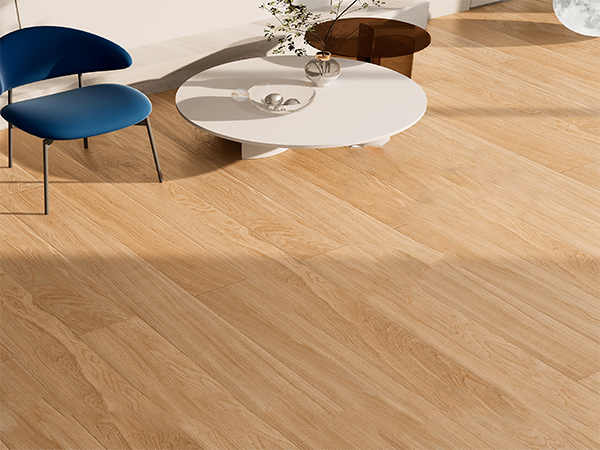
5–6mm (Economy): Lightweight and inexpensive, meeting basic wear-resistance and slip resistance requirements. Suitable for low-traffic, flat spaces such as bedrooms, studies, and guest rooms. However, it has poor pressure resistance and sound insulation, making it unsuitable for high-frequency areas like living rooms.
7mm (Golden Balance): Offers significantly improved stability, impact resistance, foot feel, and sound insulation. Suitable for core family activity areas such as living rooms, dining rooms, and kitchens. Offers the best value for money and is the top choice for whole-house renovations.
8mm (Thickened): Suitable for high-end home renovations and light commercial applications (villas, offices, shops, etc.). Highly pressure-resistant and wear-resistant, with a quiet, substantial feel. The thickened wear-resistant layer extends its lifespan.
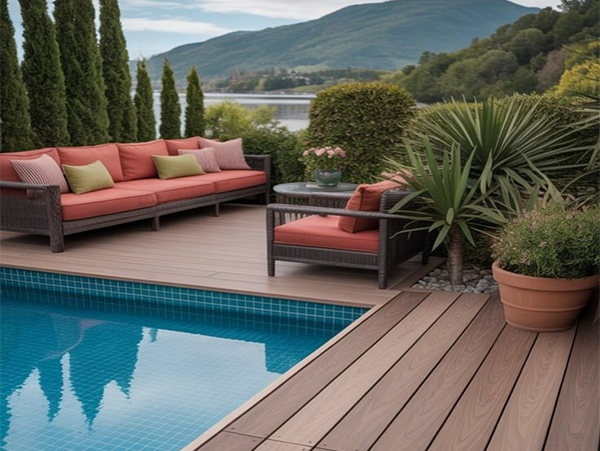
20–22mm Hollow (Lightweight): Lightweight and cost-effective, suitable for small balconies, private terraces, garden walkways, and other low-traffic private outdoor spaces. Strict control of joist spacing is required.
22–25mm Co-extruded Hollow (General Purpose): Significantly improved bending resistance, weather resistance, and UV resistance, making it the first choice for outdoor home decoration. Suitable for year-round outdoor scenarios such as courtyards, terraces, poolside areas, and community walkways.
25–30mm Solid Thickened (Heavy-Duty Commercial): High density, extremely strong load-bearing capacity, and excellent resistance to deformation and aging. Suitable for large-scale, high-traffic public projects such as park walkways, scenic platforms, and docks.
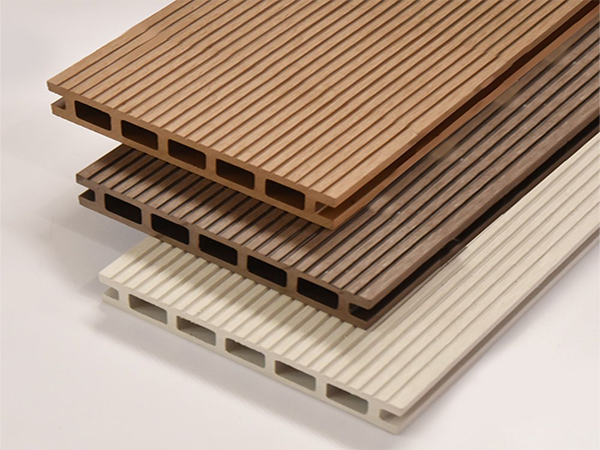
Many consumers mistakenly believe that "the thicker the flooring, the better the quality." In reality, for WPC flooring, thickness primarily affects foot feel, shock absorption, and structural stability, while the true determinants of wear resistance and lifespan are the thickness of the wear layer and the density of the core material. For low- to medium-traffic residential settings, a 0.3–0.5mm wear layer is sufficient for daily slip and scratch protection. For high-traffic commercial settings such as shops and offices, a 0.5–1.0mm thicker wear layer is recommended to extend lifespan. Furthermore, the installation substrate is equally crucial: regardless of thickness, the subfloor must be flat, firm, and dry before installation. Uneven or hollow subfloors will lead to defects such as voids, gaps, and warping, which even the thickest flooring cannot compensate for.
In short, when choosing WPC flooring, don't blindly pursue thickness—7mm for indoor use and 22-25mm co-extruded hollow core boards for outdoor use are sufficient for most applications. The key to quality and lifespan lies in the thickness and manufacturing process of the wear layer, the density of the core material, and the flatness and dryness of the subfloor before installation. Shifting the focus from "thickness" to "quality and flatness" will allow you to simultaneously achieve a comfortable feel underfoot, lasting durability, and excellent value. Choosing the right thickness, coupled with proper installation, is the foundation for long-term peace of mind.
 EN
EN